
Slow Mo Run
Supersonic Studios LTDCasual
4.11.46K Reviews
- Version
- 11.0
- Installs
- 100.00M
- Age Rating
- Teen
Screenshots
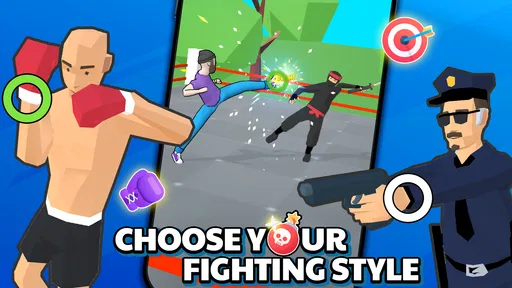
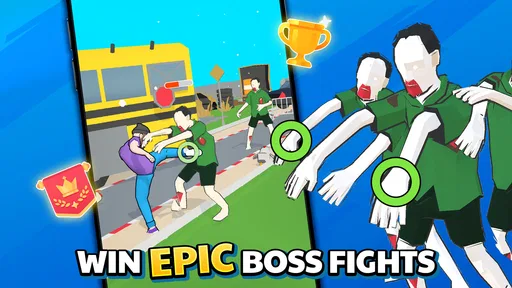
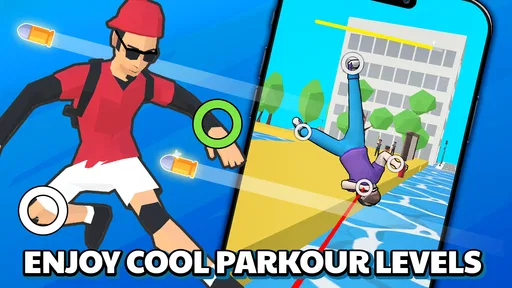
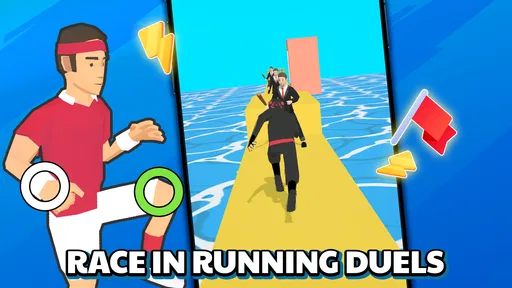
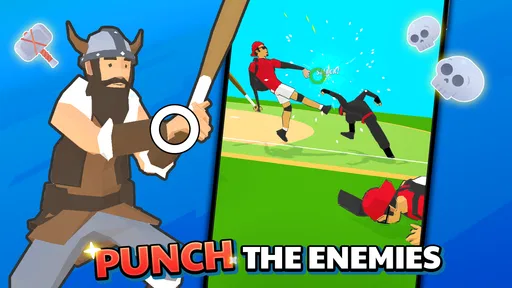
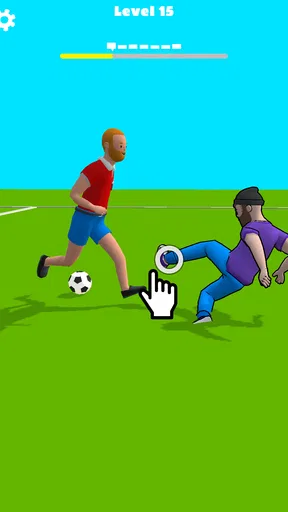
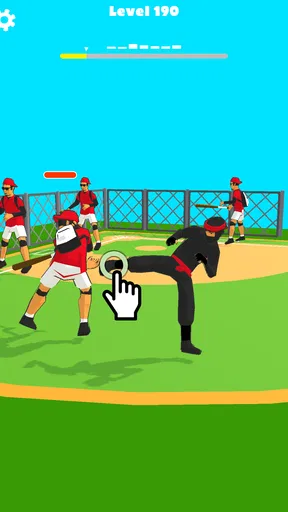
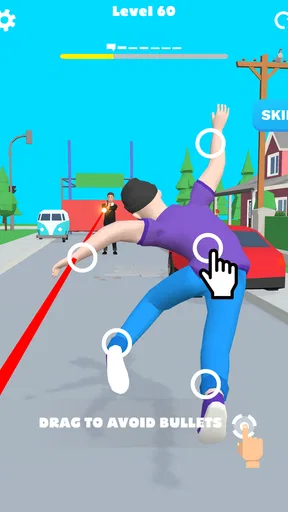
Our Review of Slow Mo Run
 Analysis by Appyee
I approached Slow Mo Run expecting a quick casual game, and that is exactly where it fits best: short sessions, simple interaction, and a playful focus on exaggerated movement. Supersonic Studios LTD presents it as a game about fighting people in slow motion, but the appeal is less about deep combat and more about timing, reaction, and the satisfaction of getting a sequence right.
It is free to play, listed for Teen audiences, and sits comfortably in the kind of category I open when I have a few spare minutes rather than a full evening to dedicate to a game. The large player base is easy to understand: it has passed over 100 million installs, while its average rating is 4.1 from around 381 thousand ratings. Those figures suggest a broad audience, but they do not automatically make it right for everyone, so I paid particular attention to the moments where the experience feels smooth and where setup or play can become frustrating.
What the game feels like in everyday use
The first thing I noticed is how quickly the game communicates its basic idea. You are not asked to learn a complicated control scheme or study a large menu system before playing. The slow-motion presentation gives ordinary actions a deliberately dramatic feel, turning each encounter into a small timing exercise. That makes it approachable for someone who normally avoids fighting games, especially if they prefer quick challenges over long campaigns.
In practice, I found the best use case was a short break: waiting for an appointment, taking a pause between tasks, or relaxing for a few minutes before bed. The game is easy to pick up without needing to remember a complicated story or a long-term strategy. I could play briefly and stop without feeling that I had abandoned an important mission.
That same simplicity is also its main limitation. Players looking for detailed character development, a demanding competitive system, or the depth of a traditional fighting game may find the experience too light. The slow-motion theme creates the personality, but it does not turn the game into a full fighting simulator. I would recommend it to someone who wants playful action and quick feedback, not to someone searching for a serious technical combat game.
Why timing matters more than button speed
The useful skill here is not simply tapping as quickly as possible. I had better results when I watched the movement and treated each moment as a timing cue. Rushing tends to make the interaction feel less controlled, while waiting for the visual signal gives the action a cleaner rhythm. That is an important distinction for new players: the game looks frantic, but careful observation is often more valuable than frantic input.
I also found that playing with a consistent grip helped. When I held the phone securely and kept my attention on the action area, mistakes felt easier to diagnose. When I played while walking or while distracted by another conversation, failures seemed less like a problem with the game and more like a problem with divided attention. This is a small point, but it makes a noticeable difference in a timing-focused casual game.
A practical habit is to treat an unsuccessful attempt as information rather than immediately repeating the same input. Ask whether the mistake came from acting too early, reacting too late, or losing sight of the cue. That approach makes the game feel less random and gives short sessions a little more purpose.
Where players can get stuck
The most common friction is likely to appear when the game does not respond as expected. Before assuming that a level or encounter is broken, I would check whether the finger is covering the relevant part of the screen, whether the device is being held at an awkward angle, and whether another app is competing for attention. A timing game can feel unresponsive when the real issue is simply that the visual cue was missed.
Another easy mistake is changing several things at once. If a player switches grip, taps faster, closes background apps, and restarts the game simultaneously, it becomes difficult to know what actually helped. I prefer a simple order: finish or exit the current attempt, return to the game, try the same action with a steadier grip, and only then move on to basic device checks.
Because the game is designed for brief interactions, a small interruption can have an outsized effect. A notification, an accidental touch near the edge of the screen, or a momentary loss of concentration can spoil a sequence. That does not necessarily indicate a serious technical fault. It may simply mean that this particular type of game benefits from a quiet few minutes more than its casual label suggests.
Setup checks before blaming the game
Slow Mo Run supports devices running Android 7.0 or later, and the current version is 11.0. That makes the compatibility requirement fairly accessible, but meeting the minimum operating-system requirement does not guarantee that every device will feel equally comfortable. Screen responsiveness, available storage, heat, and general device condition can all influence how pleasant a quick-action game feels.
Before installing or updating, I would make sure the device has enough free space for a normal installation and that the operating system is supported. I would also avoid beginning a session while the phone is already hot or heavily occupied with other demanding tasks. These are ordinary checks, but they are more useful than immediately concluding that the game itself is at fault.
If installation pauses, my first step would be to check the connection and the device’s available storage, then retry from the official app store. If the game opens and closes unexpectedly, I would restart the phone before taking more drastic action. A restart is especially sensible when several apps have been open for a long time, because temporary system congestion can affect a game without meaning that its installation is damaged.
I would be cautious about uninstalling immediately. Reinstalling can remove local progress or settings, depending on how the game handles them, so it should be treated as a later troubleshooting step rather than the default fix. The safer workflow is to close the game, restart the device, confirm the operating system and storage situation, and then test again.
Recovering a disrupted play session
When a session feels stuck, I recommend separating three possibilities: the game may have stopped responding, the device may be under strain, or the player may simply have missed the timing cue. Start with the least disruptive action. Leave the current attempt if the interface allows it, return to the game, and try a fresh round without changing several settings or habits at once.
If the screen remains unresponsive, close the game through the normal app-switching controls and reopen it. If that does not help, restart the phone. I would only consider reinstalling after those steps, and I would first think about whether any progress might be stored locally. That is a more careful approach than repeatedly deleting and installing the app, especially for a game intended to be played in small bursts.
For players who experience repeated missed inputs, the recovery process should focus on the physical interaction as well as the software. Clean and dry hands, a stable grip, and a clear view of the screen can matter in a timing challenge. Removing a thick case temporarily may also help determine whether the edge of the case is interfering with touches, although I would only make that change if the problem seems connected to edge inputs.
There is also a psychological recovery that helps. After several failed attempts, I found that tapping more aggressively usually made the experience worse. Taking a short pause and returning with the goal of observing rather than forcing the result is more productive. This is one of the less obvious strengths of the design: it can reward patience even though the presentation suggests constant action.
When the app is not the cause
Not every poor session points to a defect in the game. If the device is low on battery, hot, overloaded with open apps, or affected by a weak connection during a store operation, the symptoms can look similar to an app problem. The right response depends on the symptom. Installation trouble suggests checking connectivity and storage; sluggish play suggests checking the device’s condition; missed actions suggest checking attention, grip, and screen contact.
I would also avoid judging the game while using it in an unsuitable situation. Playing while commuting, walking, or multitasking may be convenient, but it makes a timing-based experience less reliable. If the game feels unfair only when used in those circumstances, the limitation may be the environment rather than the design.
Notifications deserve a practical mention as well. A sudden banner or call can interrupt concentration at exactly the wrong moment. For a short, focused session, temporarily reducing interruptions can be more effective than changing the game or reinstalling it. This is particularly relevant for people who open it during work breaks and expect to return immediately to the same task.
The Teen content rating is another reason to consider the intended audience before handing the device to a younger player. The game’s cartoon-like, slow-motion fighting premise may appeal broadly, but the listed age guidance should still be respected. Parents who want a very gentle game for children should choose something with an age rating that matches that expectation more closely.
Free access and the cost of convenience
The game is free to download, which makes trying it straightforward. It also includes in-app purchases priced from $3.99 to $5.99 per item. I would treat those purchases as optional conveniences rather than part of the basic reason to install the game. Anyone who dislikes spending inside casual games should decide that boundary before playing, rather than making the decision in the middle of a tempting moment.
The important trade-off is simple: free entry lowers the risk of trying it, but optional purchases can change how comfortable the experience feels for different players. If you are happy to play casually without buying anything, the game is easier to evaluate on its core interaction. If you expect a completely purchase-free experience with no prompts or interruptions, you may prefer a paid game or a different casual title with a clearer pricing model.
I also would not choose this game solely because it has a very large install count. That reach tells me it is accessible and widely noticed, but the right question is whether its short, timing-based format suits your habits. Someone who wants a game that can be played for a few minutes will probably get more value from it than someone who wants a long-term progression project.
How it compares with other casual choices
Compared with puzzle games, Slow Mo Run is more physical in its presentation and more dependent on quick visual reactions. A puzzle usually gives me time to examine a board or plan several moves, while this game asks me to stay alert to what is happening in front of me. That makes it a better choice when I want immediate interaction, but a worse choice when I am tired and looking for something calm.
Compared with traditional fighting games, it is far less intimidating. I do not approach it expecting a complex roster, detailed move lists, or a long practice routine. Its advantage is that it creates a playful action scene without requiring the commitment associated with a dedicated fighting title. Its disadvantage is that players who enjoy mastering combos, spacing, and competitive matchups may quickly want more depth.
It also differs from endless runners. Although the name suggests movement, the central appeal is not simply avoiding obstacles over a long distance. The slow-motion framing makes individual moments feel important, so success depends more on reacting to a sequence than on maintaining a continuous run. If you like the immediate feedback of runners but want more emphasis on deliberate timing, this can be a refreshing alternative.
For a realistic everyday example, I would choose it over a story-heavy game during a ten-minute break because there is little mental overhead. I would not choose it during a noisy commute if I needed reliable concentration, nor would I choose it for a relaxed evening when a turn-based puzzle would better match my mood. That context-based difference is more useful than calling it simply “fun” or “not fun.”
Who should try it and who should skip it
I think it is a good fit for players who enjoy compact challenges, visual comedy, and the satisfaction of improving through better timing. It is also suitable for someone who wants to test a casual game without paying at the start. The low barrier to entry makes it easy to sample, and the short-session structure means it does not demand a major commitment.
I would be more cautious recommending it to players who need a quiet, low-pressure experience. The action framing can feel busy even when the controls are simple, and repeated failures may become irritating if you are already tired. People who strongly dislike in-app purchase prompts should also review their own tolerance before settling into it.
It is not the right choice for someone seeking a deep fighting system, a substantial narrative, or a carefully balanced competitive environment. In those cases, a dedicated fighting game or a strategy-focused alternative would offer more meaningful long-term mastery. Slow Mo Run works best when its limits are understood as part of the package rather than treated as missing features.
My practical verdict
After using it as a short-session casual game, I see the strongest reason to recommend it in its immediacy. The slow-motion concept gives ordinary interactions a distinctive personality, while the timing focus creates enough challenge to make a quick replay worthwhile. It is easy to start, easy to understand, and flexible enough for small gaps in the day.
The setup and recovery advice is equally straightforward: use a supported device, keep some storage available, avoid testing it while the phone is overheated or overloaded, and distinguish missed timing from genuine unresponsiveness before reinstalling anything. Those checks prevent a lot of unnecessary frustration and help reveal whether the game actually suits you.
My recommendation is positive but specific. Try it if you want a free casual game built around short, exaggerated action and visual timing. Skip it if you want deep combat, a calm puzzle experience, or a completely purchase-free environment. With that expectation in place, the best way to enjoy it is to treat each round as a quick timing exercise, not as a full fighting game.
Supersonic Studios LTD has kept the idea focused, and the current version 11.0 remains easy to place in a modern casual library. Its Teen rating, broad availability on Android 7.0 and later, and free entry make experimentation simple. I would install it for brief bursts of playful action, keep my expectations modest, and choose another genre when I want depth or a slower pace.
Verdict
Strengths of Slow Mo Run
- Simple controls make it easy to start playing immediately.
- Slow-motion movement creates a distinctive and entertaining gameplay style.
- Short levels are convenient for quick gaming sessions.
- Unlockable outfits add a small personalization element.
- Runs smoothly on most modern Android and iOS devices.
Limitations of Slow Mo Run
- Repetitive gameplay may become predictable after extended play.
- Timing can feel inconsistent on some obstacles or animations.
- Progression offers limited depth beyond completing more levels.
- Frequent ads may interrupt the experience for free players.
- Some cosmetic content may require extra purchases or grinding.
Other Releases by Supersonic Studios LTD
View All


Similar Picks in This Category
View All
My Talking Angela
Outfit7 Limited4.2

My Talking Tom
Outfit7 Limited4.3

Pou
Zakeh4.2

My Talking Tom 2: Pet Game
Outfit7 Limited4.3

Candy Crush Saga
King4.6

Bridge Race
Supersonic Studios LTD4.1
Frequently Asked Questions
What is Slow Mo Run?
Slow Mo Run is a casual running game focused on timing, reflexes, and funny slow-motion animations. Instead of simply moving forward, you control a character through obstacle courses by tapping or swiping at the right moment. The goal is to avoid hazards, perform stylish movements, and reach the finish line successfully. Its simple controls make it easy to start, while increasingly demanding stages provide a light challenge for repeat players.
How do you play Slow Mo Run?
Gameplay is based on reacting quickly to obstacles and following the prompts shown on screen. Depending on the situation, you may need to tap, swipe, or hold your finger to make the runner jump, duck, stretch, or move around an object. The slow-motion presentation helps make each action visually clear, but accurate timing is still important. Learning the rhythm of each course is usually the key to completing levels consistently.
Is Slow Mo Run free to download and play?
Slow Mo Run can generally be downloaded for free on supported Android and iOS devices, allowing players to try the main gameplay without an upfront purchase. However, free mobile games may include advertisements, optional purchases, or other monetization features. Availability and pricing can vary by country, device, and store version, so it is sensible to check the official Google Play or App Store listing before downloading.
Does Slow Mo Run require an internet connection?
The basic running challenges may work without a continuous internet connection, which makes Slow Mo Run suitable for short sessions while traveling or when mobile data is unavailable. Nevertheless, some features can depend on connectivity, including advertisements, updates, analytics, cloud-related services, or in-app purchases. For the most reliable experience, open the game online at least occasionally and install updates when they become available.
Is Slow Mo Run suitable for children and casual players?
Slow Mo Run is designed as an accessible, cartoon-style game with straightforward controls and short levels, so it can appeal to children, families, and casual players. It does not require complex gaming knowledge, although some stages demand quick reactions. Parents should still review the age rating, advertising, privacy information, and purchase settings on the relevant app store, particularly if the game will be used by younger players.
Play our best games!


